24 Preludes op.28 Piano Sheet Music – Frederic Chopin
Frederic Francis Chopin, from whose pen the charming music came, was born in Zelazowa Wola, near Warsaw, Poland, on the 3rd of February, 1810, and died in Paris on the 17th of October, 1849. He was an exile from his native country since 1831.
Schumann says of this composer: “He is the most daring and the proudest poetic spirit of his time.”He was one of the most famous and also one of the most peculiar composers of the second quarter of this century, and his works have never ceased to attract lovers of good music in all countries.
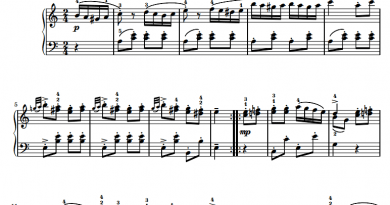
Chopin’s 24 Preludes, Op. 28: the opening of the score
He has preferred smaller forms, but in these he has excelled. When playing Chopin’s works special attention must be paid to the dynamic signs, else they will suffer. Not everyone is qualified to enter into this composer’s spirit, the teacher should, therefore, be careful in this particular.
Still more he should guard against allowing the pupil confining himself to long to this composer’s work.
Chopin’s 24 Preludes – Piano sheet music
The Preludes were composed between 1835 and 1839 at Majorca where Frederic Chopin and George Sand and her children spent the winter to run away from the humid Paris weather.
Chopin’s Preludes (1839) are an album of 24 piano pieces one for each key and each prelude meant to express a particular thought or feeling.
For their clear lack of a recognized construction and shortness, the Frederic Chopin’s Preludes originated some consternation among critics when they were published: in fact, the longer prelude is Prelude No. 17 (90 Measures).
The 24 Preludes op. 28 by Frederic Chopin are often compared to Bach’s Preludes of the Well Tempered Clavier; but each of Chopin’s Preludes were organized in a circle of fifths while Bach’s pieces were organized chromatically.
Prelude in B minor by Frederic Chopin
Prelude in B minor (Assai Lento).


Jazzedge Academy
Know the theory. Now get a practice plan.
Jazzedge Academy tells you what to sit down and practice today — one clear path, step-by-step video lessons.
See how it works →